
-1
archive,paged,author,author-lobke,author-2,paged-11,author-paged-11,wp-theme-stockholm,wp-child-theme-stockholm-child,stockholm-core-2.4,tribe-no-js,select-child-theme-ver-1.1.2,select-theme-ver-9.14.4,ajax_fade,page_not_loaded,,qode_menu_,wpb-js-composer js-comp-ver-8.7.2,vc_responsive
  • Sort Blog:
  • All
  • Best-practice
  • Blog
  • EDI
  • Education
  • News
  • No category

The key succes factors of NTG collaborative Framework for skills development in tourism explained

During the NTG final Conference, a lot of insights have been collected on best practices for skills partnerships. As part of the NTG Blueprint, which sets out a comprehensive methodology to respond to the needs of a new sectoral skills strategy that is innovative, relevant and responsive to the current and future skills scenario in the tourism sector, the skills partnerships has been one of the key succesfactors.

The NTG Collaborative Governance framework within the Blueprint provides guidance on successful collaboration which can support and assist the establishment of National/Regional Skills Partnerships (NRSPs), a key area of focus of the NTG Alliance and the Pact for Skills for Tourism. Additionally, the skills agenda aligns with the Pact objectives of increasing resilience, competitiveness, and social fairness, promoting a culture of lifelong learning, building skills partnerships, and building skills supply.

In this blog we will look at examples from Wales, Italy and Bulgaria.

READ MORE

Final NTG Blueprint Document

The Blueprint document is an output of the Next Tourism Generation (NTG) Alliance, a strategic and multi-layered collaborative partnership formed in 2018. Building on previous work by the European Commission and sectoral partners to address skills gaps in tourism, the NTG Alliance is one of the Sector Skills Alliances set up as part of the Blueprint for Sectoral Cooperation on Skills. Each Sector Skills Alliance is funded by the Commission and was tasked with setting up a Blueprint.

READ MORE

Presentations and video’s of the NTG Final Conference

In view of the project’s closure at the end of June, a Final online Conference was organised and held on June 9th, attended by approximately more than 150 participants from the tourism sector across Europe.

Among the invited experts were Dr. Dan Tromans – Qualification Wales, Georges el Hajal – NHL Stenden,  Marie-Hélène Pradines – European Commission, Martha Machado – HOTREC, Stefan van Tulder – Talent Data Labs and Josie and Theodor Grassos – EVBB to talk about the need for skills development in tourism. They shared best practices and their perspective on the future of tourism when it comes to skills.

Divided into four modules, the online conference brought together tourism stakeholders from government and policymakers, to industry and education and training institutions on European, national, and local/regional levels. The program was filled around four major topics, discussing current and future needs and the transition of green, digital and social skills development in tourism. Every module focuses on topics such as ‘Collaborative framework on skills development and the NTG Blueprint’, ‘Innovation in Education, Skills Training, and curriculum development’, ‘Assessing skills gaps and future skills needs in tourism’, ‘The road ahead on skills in tourism – Pact for Skills and PANTOUR’. 

The conference also showcases the work done under the Next Tourism Generation project and highlights how the Blueprint project will stimulate the Transition Pathway regarding skills and how the project feeds into the Pact for Skills in Tourism.

Watch it now:  NTG Final Conference 9 June 2022 – YouTube 

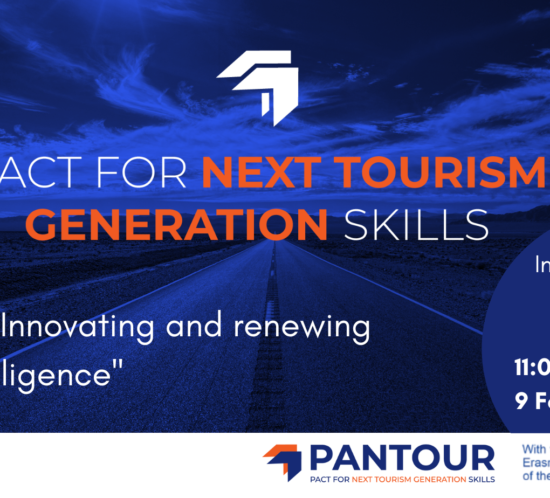
Finally, after the conference, the final NTG Consortium meeting took place in Madrid, and the efforts of NTG will be continued in a new project: PANTOUR. The project’s legacy will be the reference for bridging skills gaps and future skills needs in tourism, promoting the Next Tourism Generation Blueprint and the Skills Lab Platform, among other relevant skills resources and tools the project delivered.


Intellectual Curiousity and Passion-Driven: Key Features of Future Young Professionals!

Stefan van Tulder is Data Scientist, CEO and founder of Talent Data Lab. Although a young professional, Stefan has numerous achievements in his relatively short career. He holds a double master’s degree in Business and Management and has a background in Quantitative Methods (Statistics; Psychology) and was part of the CEMS global business school alliance. His current project: Career Analytics, is a platform designed to help (tourism & hospitality) students, in their career prediction. This is in the form of an App to test students’ confidence in their study program, and to see if this will boost their confidence in their future career choice.

READ MORE

NTG Final Conference: The transition of green, digital and social skills development

On the 9th of June, the NTG Alliance hosts the final online conference ‘The Next Tourism Generation: The transition of green, digital and social skills development’. This conference will be divided into four main modules; collaborative framework on skills development and the NTG Blueprint, innovation in Education, Skills Training, and curriculum development, assessing skills gaps and future skills needs in tourism and the road ahead on skills in tourism – Pact for Skills and PANTOUR. 

READ MORE

First meeting of National Skills Group (NSG) Italy dedicated to the tourism sector

Launched by the European “Next Tourism Generation Alliance” (NTGA)  project, the ‘National Skills Group (NSG) Italy’, whose aim is to implement the European strategy on skills in tourism, held its first meeting on March 2nd.

The round-table session saw the participation of Chambers of commerce, Regional Unions of Chambers of commerce, Universities, Research Institutes and various Trade and Sector Associations which signed a Memorandum of Understanding (MoU), an agreement protocol aimed at the development and sharing of knowledge, training facilities and methods with a view to facilitating tourism and relative sector supply chains in the transition towards the skills of the future. Delegates from the Lombardy and Piedmont Regions were also present.

READ MORE

Gender equality and diversity: reskilling, upskilling and returning workers to the hospitality workforce post-Covid

Gina Oglesby, Back to Work Connect interview


Since the beginning of the pandemic, many studies have pointed out the disproportionate impacts of Covid-19 on the female workforce (OECD a, 2020, European Parliament 2020, UN Women 2020). Arguably the pandemic exacerbated structural inequalities that already existed (UN 2020, Wenham, Smith and Morgan 2020). Women faced differential economic risks, having been overrepresented in hardest-hit sectors of the economy, facing several barriers in business, being more vulnerable to the economic impacts of the crisis, and having to take care of family responsibilities, forcing them to leave their jobs and studies (OECD a, 2021). Furthermore, according to the World Forum Economic Report (2020), since the beginning of the pandemic, displaced workers have been on average more likely to be female, younger and earning a lower wage (p. 17). In the tourism and hospitality industry, the effects of the Covid-19 crisis on women were even more visible as they are more likely to work in this hard-hit sector supplying 60% of the workforce in accommodation, 53% in food and beverage and 47% in air transport around the globe (OECD b, 2021, p 7). Covid-19 impacted jobs and hours of work – particularly for this group (Renaud et al., 2020). Additionally, the loss of jobs in the sector, already highly gendered, the social struggle women have facing as caregivers during the pandemic and the barriers found in applying – for jobs led to more inequalities in the job market.

READ MORE

Next Tourism Generation Alliance participated in the EU Industry Days

Last week, the Next Tourism Generation Alliance participated in the EU Industry Days. The program had a special focus on tourism and skills. Did you know that the tourism sector generates 10% of the European GDP and jobs? During the event, the European Commission presented the ‘transition pathway for tourism’. The Next Tourism Generation already mobilized to catalyze the green and digital transitions of the tourism sector through practice-based research and provide the current next generation of tourism professionals with skills for the future through training and education.

NTG participated in the spotlight event with the track ”EU accelerating the green, digital and resilient transition”. On February 9, Klaus Ehrlich (photo), General Secretary, Ruraltour-European Federation of Rural Tourism and NTG partner, represented the EU Pact for Skills: towards the up and re-skilling of the European workforce.

The NTG Alliance is proud to sign and support the official Pact for Skills partnership

European Commission leads push for new and additional skills for workers in the tourism industry


Today, 31 January 2022,  the Next Tourism Generation Alliance signs and supports the official Pact for Skills partnership for workers in the tourism industry. With the support of the Commission, the tourism industry, European tourism umbrella associations, vocational education and training providers, and trade unions have set up a large-scale skills partnership for the EU tourism ecosystem. Members of the partnership have agreed on specific commitments and indicators to support tourism workers in learning new skills in the coming years. These could include digital, green, and social skills, such as customer service training and language skills, all of which can improve employability in this sector.  One of the objectives of the partnership is to increase upskilling and reskilling activities and participation by 40% for the employed workforce, and by 80% for the unemployed by 2025. As the EU tourism ecosystem has been severely hit by the COVID-19 pandemic, investing in skills is essential to maintain its competitiveness, to meet the economic and social responsibilities of the sector, and to enable its digital and green transition.

Thierry Breton, Commissioner for Internal Market, said:

“As one of the most impacted ecosystems during the pandemic, tourism businesses have lost valuable employees and are hampered by a lack of skilled workforce. For a sustained recovery, we need to give the tourism workforce the necessary skills to address the changing demands of tourists and to become pioneers in the green and digital transition. National and regional skills partnerships will drive the implementation of the Pact for Skills on the ground.” Commissioner for Jobs and Social Rights, Nicolas Schmit, said: “Europe’s tourism ecosystem is facing unprecedented hardship because of the COVID-19 pandemic. This new partnership for skills will respond the needs of our companies and workers. It will provide tools to support them and will help create new quality jobs”.

Following commitments in 6 other industrial ecosystems, this partnership is a concrete implementation of the Pact for Skills, one of the flagship initiatives under the European Skills Agenda for sustainable competitiveness, social fairness, and resilience. The main objective of the Pact is to mobilise resources and incentivise all relevant partners to take concrete action to upskill and reskill the workforce in key industrial ecosystems. Since its launch, over 500 organisations have pledged to reskill over 1.5 million people in Europe. This initiative also contributes to the EU-level headline target that by 2030, at least 60% of all adults should participate in training every year. In addition, the initiative supports the tourism transition pathway, which is being co-created by tourism stakeholders.

Download the Pact for Skills – Skills Partnership for the Tourism Ecosystem: Pact for Skills Tourism 2021 12 17 – final with logos.