-1
archive,paged,category,category-news,category-4,paged-2,category-paged-2,wp-theme-stockholm,wp-child-theme-stockholm-child,stockholm-core-2.4,tribe-no-js,select-child-theme-ver-1.1.2,select-theme-ver-9.14.4,ajax_fade,page_not_loaded,,qode_menu_,wpb-js-composer js-comp-ver-8.7.2,vc_responsive

PANTOUR consortium in Chios, Greece

Surrounded by the beautiful scenery of Chios island – Greece, the PANTOUR consortium gathered mid-way through the project to discuss the progress and follow up actions, key activities, deliverables and milestones.
Our work achieved some milestones in the past months providing fresh data on current skills gaps and future skills needs but exciting next steps are on the horizon. We are currently working on a revamped Tourism Skills Lab – an interactive skills tool to assess skills for individuals, SME’s and training institutions.
We will soon deliver updated training materials on digital, green and social skills and contains a set of resources with guidance notes on how they can be used by educational establishments, training providers, employers, government departments, and individuals to review the requirements of jobs and functional areas within the hospitality and tourism sector. A handbook for EDI practices will be delivered, 10+ new occupational profiles will be introduced and explained, and interesting activities will continue to happen within the National and Regional Skills Partnerships to ensure continuation of our work so far.

Launch: Sectoral Tourism Skills Intelligence Monitoring System

Just Launched: The PANTOUR Sectoral Skills Intelligence Monitor (SSIM).


The SSIM consists of a toolkit for collecting and analysing data to assess skills and address skills gaps on the level of the tourism and hospitality sector. The SSIM for the tourism sector is designed to identify current and future workforce skills in order to enable evidence-based decision-making around workforce strategies required to achieve sustained organisational performance and to build a capable workforce. Workforce skills, in the broadest sense, are the capabilities, competencies, qualities, talents, and knowledge that enable people to perform successfully in the labour market.

Read more and download the guide on how to set-up Skills Monitoring in Tourism.


PANTOUR at CBTS and annual ATLAS Conference

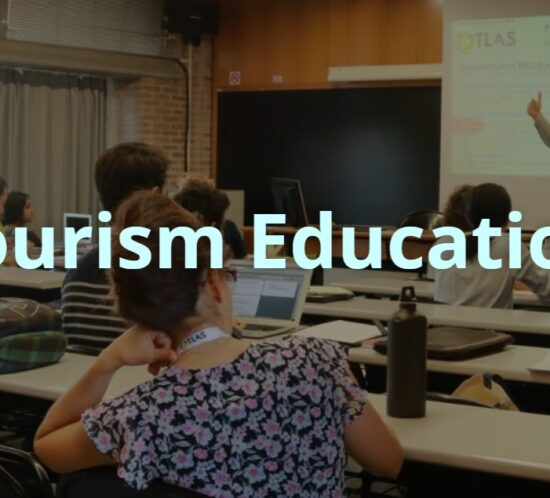
From the 24th until the 28th of June, Breda University of Applied Sciences hosted two major global events. The Consumer Behaviour in Tourism Symposium  discussed the topic of Tourism Transformation and more Sustainable Behaviour. The annual ATLAS Conference was centred around Leisure and Tourism in 2030: Navigating the Future. During both events, several PANTOUR colleagues received the stage to present and discuss the most recent research results, global challenges around the topic of human capital and academic insights from researchers all around the world.

READ MORE

PANTOUR at the INC Conference in Amsterdam, 5-7 June 2024

From June 5 to 7, 2024, the THE INC Conference took place at the Hotelschool The Hague, Amsterdam Campus, drawing professionals, academics, and industry leaders from around the world. The conference revolved around the leading theme, “Technology Enabled Competitiveness and Experiences in Tourism, Hospitality and Events.”

Stanislav Ivanov from Zangador Research Institute and Corné Dijkmans from Breda University of Applied Sciences, both members of the PANTOUR team, participated in a panel discussion on the innovation and future of tourism and hospitality. The panel was moderated by Elena Michopoulou, and featured other renowned academics, like Dimitrios Buhalis, Juho Pesonen, Silvia De Ascaniis, and Ian Yeoman.

The conversation highlighted that although AI and technology can significantly enhance operational capabilities and customer experiences, the heart of the industry lies in its people. The ability to integrate new technologies effectively and ethically requires a workforce that is not only technically proficient but also adaptable, creative, and socially conscious. The panellists agreed that while artificial intelligence and other technologies will undoubtedly drive innovation and efficiency, the true catalyst for sustainable tourism future will be the development of skilled, proactive human professionals.

Finally, in the midst of rapid technological advancements, the focus should remain on empowering individuals to leverage these tools effectively, ensuring a balanced approach that combines technological skills with human intelligence.

Release of the latest PANTOUR Skills Reports in Tourism

The Pantour Project has just released its latest Skills Reports around Digital, Green and Social skills development in tourism, and they’re packed with invaluable digital insights! From emerging trends to cutting-edge technologies, discover how digital transformation is reshaping the tourism industry in Europe and what digital skills are needed for organisations. Download your copy now for a comprehensive European perspective or explore reports from 10 different EU countries, available in English or the local language.

Click here to get access to all reports.

PANTOUR AT ITB AND ALL COUNTRY SKILLS REPORTS AVAILABLE

The travel industry is facing a critical challenge: a shortage of skilled workers. It’s time to address this issue by analysing the current skills gap and identifying future skill needs. Reflecting on our recent contribution to ITB Berlin, we had the opportunity to present the latest research findings from PANTOUR: the Tourism Country Skills Profile Reports. These reports offer exclusive insights into the skill landscape of key European markets.

At ITB Berlin, we were invited to support a call to action for investing in skills development across the entire travel, tourism, and leisure industry. During our panel discussion, we shared fresh data, facts, and proposed solutions alongside selected experts and industry leaders.

On March 7th, our colleague Corné Dijkmans delivered a keynote, presenting the latest insights on skills development in Europe. In the panel discussion, colleague Lobke Elbers joined him to provide in-depth insights from best practices, alongside esteemed co-panelists Marlène Bartès from the European Commission and Claire Steiner from ITT – The Institute of Travel & Tourism, for a deep dive panel discussion on the human capital challenges and opportunities in our industry.

Against the backdrop of the European Year of Skills, the focus is on upskilling and reskilling individuals to acquire the necessary skills for quality jobs, addressing skill shortages, and supporting companies in Europe. A workforce equipped with in-demand skills is crucial for sustainable long-term growth and competitiveness, while ensuring that the green and digital transitions are socially equitable and inclusive.

The downloads on our European and Country Skills Profile Reports are available on our website: nexttourismgeneration.eu/research-pantour/

Exploring Finland: Blending work, best practice and collaborative fun in the pursuit of Next Tourism Generation Skills

Some greetings and impression from our latest consortium meeting in Finland, where we’ve embarked on a journey to blend work and fun in pursuit of advancing the Pact for Next Tourism Generation Skills project. In this meeting we reflected on our milestones halfway the project, set new goals and ambitions to make our deliverables practical and attractive for the European tourism subsector. Ofcourse we also celebrated our collaborative spirit, and chart our path forward in this scenic Nordic setting.

READ MORE

PANTOUR at the ENTER24 e-Tourism Conference

In January 2024 Stanislav Ivanov and Corné Dijkmans participated in the annual ENTER conference. For three decades, the ENTER e-Tourism conference has served as a convergence point for the Tourism and IT sectors, educational institutions, governmental bodies, and various organizations. ENTER provides an unparalleled global platform for engaging in active discussions, sharing insights, and evaluating contemporary research and industrial case studies related to the use of Information and Communication Technologies (ICTs) in the travel and tourism sector.

In a special panel dedicated to the AI impact on tourism education, participants discussed whether AI is an ally or an enemy for those studying tourism and hospitality. The use of generative AI undoubtedly will change the foundation of the education system, but it will also bring new benefits for the students. For example, the use of AI may develop digital and analytical skills, while social and transversal skills remain as a must for everybody in the field of services and hospitality. In this regard, the ability to work with AI becomes an important part of the digital skills set of every educational and training institution.


Bridging Innovation and Learning in the Hospitality and Tourism Sector

Colleagues of the Pantour consortium; Federturismo Confindustria and Ruraltour went to Singapore to moderate the BILT sessions, focusing on solutions for the digital and green transition in Singapore. What are the digital and green skills we need in the future of tourism? The conference entitled “Hybrid BILT Bridging Event – TVET for Hospitality and Tourism: Solutions for the Digital and Green Transition”, was the first on-site Bridging Event of the BILT project in the Asia-Pacific region. It provides a platform for outlining trends in green and digital qualifications and competencies, with a focus on the hospitality and tourism sector.

READ MORE