-1
archive,paged,category,category-blog,category-2,paged-2,category-paged-2,wp-theme-stockholm,wp-child-theme-stockholm-child,stockholm-core-2.4.9,tribe-no-js,select-child-theme-ver-1.1.2,select-theme-ver-9.14.4,ajax_fade,page_not_loaded,,qode_menu_,wpb-js-composer js-comp-ver-8.7.3,vc_responsive
  • Sort Blog:
  • All
  • Accommodations
  • Covid-19
  • Destination management
  • Digital skills
  • Food & Beverage
  • Green skills
  • Hospitality
  • Social skills
  • Travel agencies & Tour operators
  • Visitor attractions

Webinar Recap: Key insights on Sector Intelligence and Tourism & Hospitality skills that matter

The future of tourism is not waiting and neither are the skills it demands. Across Europe, the sector is navigating a complex mix of digital acceleration, sustainability pressures, and shifting workforce dynamics. The challenge? Moving from intuition to insight, and from insight to action. In this webinar, leading voices from academia and industry unpacked what that really means in practice. From skills intelligence systems to on-the-ground hospitality experiences, each session offered a different lens on one shared question: are we building a workforce that’s ready for what’s next?

READ MORE

Tourism Skills in Transition: PANTOUR and Digital Transformation in Hungary

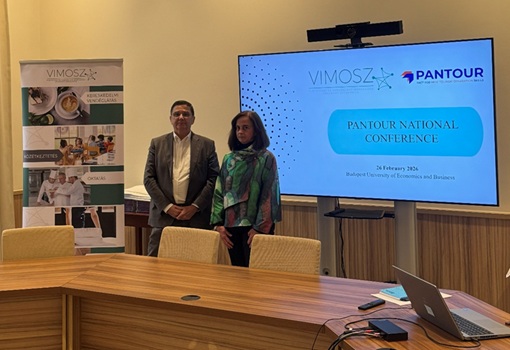
On 26 February 2026, the Hungarian Hospitality Employers’ Association (VIMOSZ) hosted the National Skills Council conference in Budapest within the framework of the PANTOUR project. The event brought together representatives of higher education institutions, vocational training providers, sectoral organisations and tourism enterprises to discuss current challenges and future-oriented solutions in tourism skills development. The conference provided a comprehensive overview of the results of the PANTOUR project, the launch of DigitalTourBoost under DIMOP Plus, and new European-level initiatives shaping the future of tourism education and workforce development.

READ MORE

Recap and downloads PANTOUR Brussels Conference: From Skills Intelligence to action for Europe’s Tourism Workforce

On 24 February 2026, we hosted the final PANTOUR conference at ETOA’s Brussels headquarters, bringing together industry leaders, educators, policy makers and sector associations to reflect on four years of research, innovation and collaboration. The event marked not only the culmination of an EU-funded project, but the presentation of a practical framework to address Europe’s tourism skills needs over the next decade.READ MORE

From Dilemma to Synergy: The Future of Skills in Greek Tourism & Hospitality

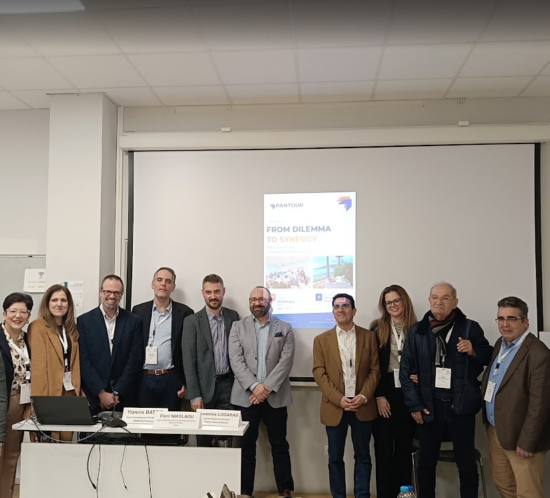
On Friday, February 27th, the iTED Research Lab of the Department of Tourism Economics and Management of the University of the Aegean, within the framework of the 2nd INTOCUS INTERNATIONAL CONFERENCE, organized the National PANTOUR Conference 2026, a pivotal event bringing together representatives from the industry, the government, and the academic community. The main goal of the event was to explore the contemporary challenges and future needs regarding skills in the broader tourism ecosystem, with a special focus on the Greek context. This blog includes key insights and conclusions from the Greek National PANTOUR Conference

READ MORE

Finland’s national event: the changing landscape of tourism | Exploring future skills, work and opportunities

On 20 January 2026, tourism professionals, educators, students and industry stakeholders gathered both online and at the SAMK Pori Campus for the seminar The Changing Landscape of Tourism: Operating Environment, Job Roles and Skills. Organised as part of the EU-funded PANTOUR project, the event brought together 109 participants to discuss how the tourism and hospitality sector is evolving and what kinds of skills, attitudes and competencies will be needed in the coming years.

The seminar focused on one central question: what will tourism work look like in the next 5–10 years? Through expert presentations and open discussion, the event highlighted how rapidly changing operating environments, new technologies, sustainability demands and shifting customer expectations are reshaping the industry.

READ MORE

How to work on skills and capacity building from a national perspective: a best practice from Portugal

National and Regional Skills Partnerships (NRSPs) are collaborative platforms designed to bring together the full tourism ecosystem, education providers, industry representatives, public authorities and social partners around a shared mission: aligning skills development with the real and evolving needs of the sector. Emerging from the work of the Next Tourism Generation Alliance and strengthened through the European Commission’s Pact for Skills in tourism, NRSPs have become a practical mechanism to translate European ambition into national and regional action. Through projects such as PANTOUR, they build continuity, reuse proven methodologies, and foster structured cooperation between stakeholders who shape the future of tourism skills.READ MORE

Piloting of the Sustainable Resources Management programme at Technological University Dublin

The Sustainable Resources Management programme, created under the PANTOUR research project, was piloted at Technological University Dublin on November 13th. The one-hour session took place at Ballymaguire Restaurant in the Central Quad campus, as part of the induction for 1st year students in the Bakery programme of the School of Culinary Arts and Food Technology. With a total of 28 student participants, the workshop was led by lecturers Sheona Foley and Shannon Dickson with the participation of the researchers Fernanda Rabelo and Fernanda Vergara, and support from the project investigator in Ireland and Head of School of Culinary Arts and Food Technology, Denise O’Leary.READ MORE

EDI as a key factor for building the future of tourism: Takeaways from the national Pantour Conference in Portugal

On 16 October 2025, the Porto School of Hospitality and Tourism hosted the National PANTOUR Conference 2025, an event that brought together professionals, educators, policymakers and students to explore one of the most transformative priorities for the sector’s future: Equality, Diversity, and Inclusion (EDI). Guided by the theme “Equality, Diversity and Inclusion in the Tourism Sector” the conference created a dynamic forum for dialogue, knowledge exchange, and collective action. Participants reflected on the role of EDI in strengthening the resilience, innovation capacity and social responsibility of tourism and hospitality organizations. The highlight of the event was the presentation of the Equality, Diversity and Inclusivity (EDI) Handbook of Best Practices, developed within the European project PANTOUR – Pact for Next Tourism Generation Skills. This handbook offers practical tools, a structured change-management methodology, and 31 real case studies from European tourism and hospitality organizations, providing SMEs with a concrete, implementable roadmap for strengthening inclusion in their workforce and operations.

READ MORE

PANTOUR hosts its first international conference in London: Shaping the future of skills in European tourism

PANTOUR’s inaugural International Conference in London marked an exciting milestone in the project’s final year, bringing together leading experts, educators, and industry voices to explore how the tourism workforce is evolving in a rapidly changing world. Held in collaboration with ETOA (European Tourism Association) and aligned with their Global European Marketplace event, the conference delivered a dynamic programme filled with insights, dialogue, and shared commitment to strengthening skills development across Europe.

READ MORE

Best Practice De Pleats – Local Inclusion in Friesland, The Netherlands

De Pleats is a family restaurant that has been in business for 27 years. It offers a range of services through a multifunctional space providing coffee, food, and catering services for meetings, weddings, and parties. The restaurant is described as the ‘house room of the local community,’ indicating its central role in the town’s social life. The organisation employs 50 people, equivalent to 25 full-time positions and the rest of the staff working part-time.

READ MORE