

Tourism Skills in Transition: PANTOUR and Digital Transformation in Hungary
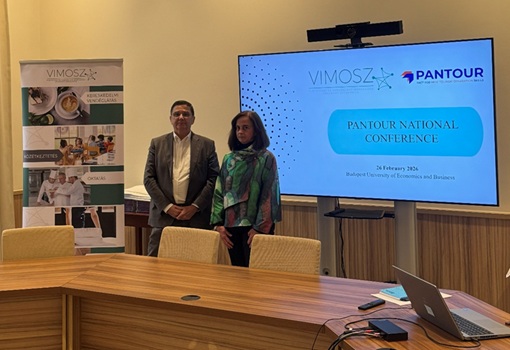
On 26 February 2026, the Hungarian Hospitality Employers’ Association (VIMOSZ) hosted the National Skills Council conference in Budapest within the framework of the PANTOUR project. The event brought together representatives of higher education institutions, vocational training providers, sectoral organisations and tourism enterprises to discuss current challenges and future-oriented solutions in tourism skills development. The conference provided a comprehensive overview of the results of the PANTOUR project, the launch of DigitalTourBoost under DIMOP Plus, and new European-level initiatives shaping the future of tourism education and workforce development.
PANTOUR in Action: Developing Tourism Competences
As part of the conference, participants received an update on the latest outcomes of the PANTOUR project. The discussion highlighted the emerging job profiles, the related competence needs in digital, green and social areas, and the growing importance of short cycle, modular training solutions for upskilling and reskilling across the sector.
The update covered in particular:
- the development of 11 new occupational profiles reflecting evolving roles in tourism,
- the publication of the New Occupational Profiles Handbook,
- dissemination and best practice sharing across the sector,
- and the update and development of around 130 short, modular training programmes.
The dialogue confirmed that tourism businesses increasingly require adaptable skills strategies to respond to technological change, sustainability expectations and labour market challenges.
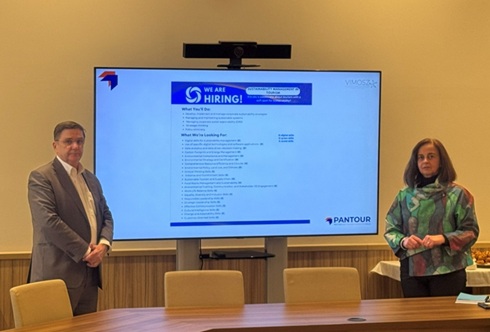
Image 2: Dr. Lajos Böröcz (Secretary General, VIMOSZ) and Dr. Csilla Jandala (Senior Researcher, VIMOSZ) presenting the latest outcomes of the PNATOUR project
DigitalTourBoost: Supporting Hungarian Tourism SMEs
Building on the practical results of PANTOUR, Hungary has launched DigitalTourBoost under the DIMOP Plus (Digital Renewal Operational Programme), with the objective of linking skills development to the digital transformation of tourism SMEs.
The project is led by VIMOSZ in consortium with major Hungarian sectoral organisations, ensuring that accommodation providers, hospitality businesses, travel agencies and event organisers are all represented in its implementation. Its core ambition is to provide meaningful, structured support to SMEs seeking to improve their digital readiness and long-term competitiveness.
DigitalTourBoost is built on three interconnected pillars. It begins with a comprehensive digital maturity assessment across tourism subsectors, identifying competence gaps and development priorities. Based on these findings, a national advisory network provides tailored guidance and connects businesses with relevant digital tools and training solutions. The third pillar is the creation of an integrated online knowledge and training Hub, offering access to curated learning programmes while also facilitating the uptake of practical digital service solutions.
To ensure coherence with European-level initiatives, a dedicated Educational Working Group integrates training content developed under EU-funded projects such as NTG and PANTOUR. Around 130 short-cycle programmes have been reviewed across digital, green and social competence areas, with a selected portfolio to be rolled out in alignment with SME needs and national qualification levels, most of them also in Hungarian.
By combining assessment, advisory support and competence-based training, DigitalTourBoost represents a concrete national implementation of broader European tourism skills strategies.
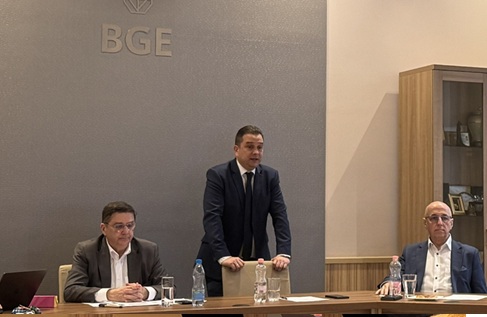
Image 3: Roland Sívó, project coordinator at VIMOSZ, presenting the DigitalTourBoost project under DIMOP Plus. Also visible in the photo are Dr. Lajos Borocz (Secretary General, VIMOSZ) and Attila Bándoli (Chair of the Tourism Sector of Skills Council).
Best Practices: Innovation in Education and Training
A dedicated session of the meeting focused on educational and training best practices from Hungarian institutions active in tourism and hospitality.
Artificial intelligence, sustainability, mental well-being, and labour market challenges were highlighted by the Sector of Skills Council (ÁKT) as central themes for the tourism and hospitality sector. The Council also emphasized the need to address declining interest in front-of-house professions, while maintaining high service standards as a key competitiveness factor. In connection with PANTOUR, VR/AR-based learning elements, short online modules and interactive tools were presented as practical examples of immersive, modular learning solutions supporting upskilling in the sector.
Higher education institutions showcased renewed, competence-based curricula aligned with labour market expectations, including case-study-based final examinations and portfolio-focused assessment models. Training providers highlighted short-cycle programmes addressing AI, cybersecurity, automated guest communication, sustainability and data-driven decision-making.
Together, these examples illustrated how Hungarian education providers are actively adapting to digital transformation, sustainability requirements and changing skills demands in tourism.
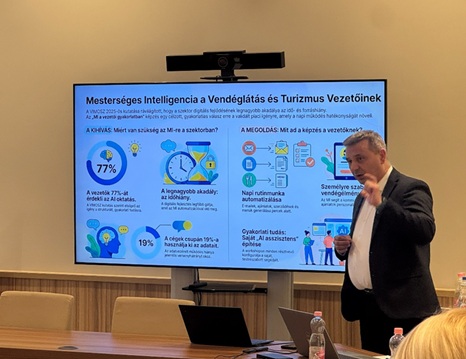 Image 4: István Détári (Head of the Artificial Intelligence Centre, Edutus University) presenting new short-cycle training programmes designed to support tourism SMEs in digital transformation
European Tourism Training Initiatives: FuTourAlliance and ETSA
The meeting also briefly introduced the FuTourAlliance project, which aims to address labour shortages and long-term skills needs across the European tourism ecosystem. The initiative reinforces the importance of coordinated action between industry, education and policy actors at EU level.
Participants also received an overview of the European Tourism Skills Academy (ETSA), which intends to provide accessible online training and micro-credentials. ETSA integrates modern curricula developed in EU-funded projects such as NTG and PANTOUR, supporting upskilling and reskilling in digital, green, and social competences throughout the tourism sector.
Key Takeaways
- AI and digitalisation are no longer optional. Tourism SMEs recognise the need for practical digital solutions, but require accessible and flexible training formats to implement them effectively.
- Collaboration between education and industry is essential. Continuous dialogue and joint initiatives are key to ensuring that skills development keeps pace with sectoral transformation.
- Skills strategies must translate into practical training solutions. Identifying emerging job profiles is only the first step. Real impact comes from turning competence needs into accessible, modular training opportunities that support upskilling and reskilling across the sector
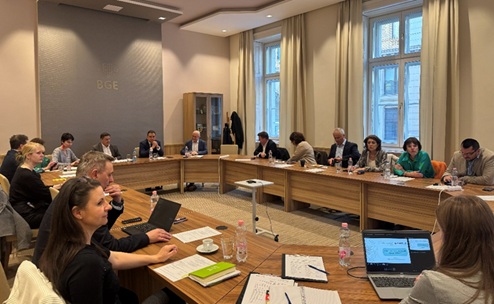 Image 5: Representatives of higher education institutions and sectoral organisations during the PANTOUR National Conference
At a time when tourism is simultaneously facing labour shortages, digital disruption and increasing sustainability expectations, aligning European strategies with national implementation has become critical. The conference demonstrated how EU-level frameworks and Hungarian sectoral initiatives can reinforce each other in practice.
No Comments