


Webinar Recap: Key insights on Sector Intelligence and Tourism & Hospitality skills that matter
The future of tourism is not waiting and neither are the skills it demands. Across Europe, the sector is navigating a complex mix of digital acceleration, sustainability pressures, and shifting workforce dynamics. The challenge? Moving from intuition to insight, and from insight to action. In this webinar, leading voices from academia and industry unpacked what that really means in practice. From skills intelligence systems to on-the-ground hospitality experiences, each session offered a different lens on one shared question: are we building a workforce that’s ready for what’s next?
Human Capital in tourism: PANTOUR Skills Intelligence Monitoring
Setting the tone for the entire webinar, this opening session made one thing clear: “intelligence is necessary for well-informed decision making.” Through the PANTOUR Skills Intelligence Monitoring system, participants were introduced to a structured, data-driven approach to understanding skills needs across the tourism ecosystem. By continuously analysing current and future gaps across green, digital, and social skill sets, as well as different roles and business sizes: the system helps turn fragmented signals into actionable insights. Importantly, the session showed how this goes beyond theory: from redesigning onboarding programmes in hotel chains to informing national policy and funding decisions. In a sector facing rapid change, skills intelligence becomes a critical tool to address mismatches, shortages, and the growing urgency of workforce resilience.
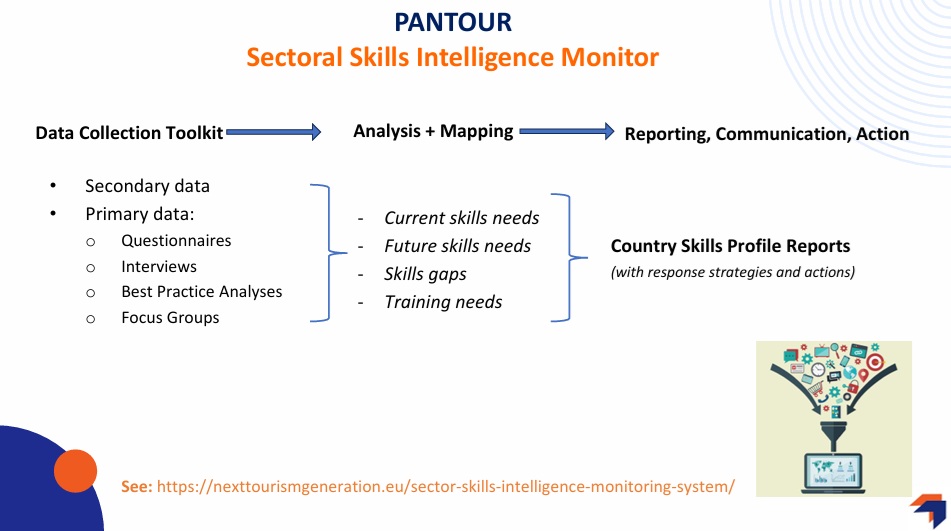
Download the slide deck Corné Dijkmans – SKILLS INTELLIGENCE PANTOUR.
Digital skills in Greek hospitality
In a sector that has long relied on tradition, Greek hospitality is now undergoing a rapid digital shift. This presentation highlighted how businesses are moving from intuition-based operations to more data-driven strategies, responding to increasingly tech-savvy travellers. The scale of tourism in Greece amplifies both the opportunity and the pressure: digital tools are no longer optional but essential to manage demand, personalise services, and remain competitive. A key insight was the growing gap between existing capabilities and emerging needs: making upskilling not just beneficial, but urgent for the sector’s long-term sustainability. This presentation offered a compelling look at how digitalisation is rapidly transforming the Greek tourism sector. The session highlighted how essential digital skills have become for businesses aiming to remain competitive.
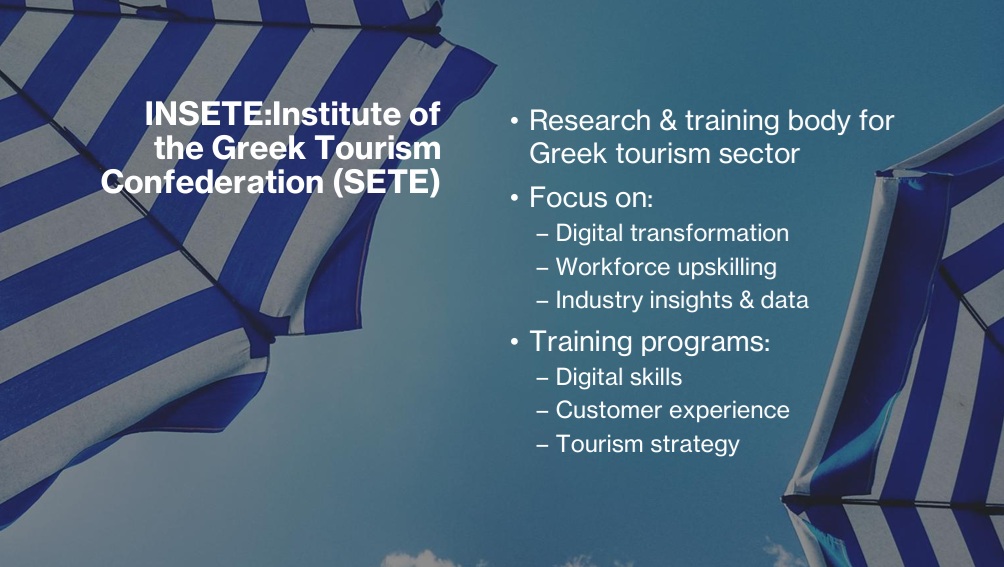
Download the slide deck Yiannis Bastis – DIGITAL SKILLS IN GREEK TOURISM.
The evolution of social skills in hospitality (Hilton Madrid)
What does “good service” really mean today? This session challenged traditional definitions by showing how social skills in hospitality are being redefined in a tech-enabled environment. At Hilton Madrid, delivering great experiences is no longer just about friendliness, but about understanding and anticipating guest needs through a combination of emotional intelligence and digital tools. Whether through CRM systems or real-time communication platforms, technology enhances -but does not replace- the human touch. The key takeaway: the future of hospitality lies in professionals who can seamlessly blend empathy with efficiency.
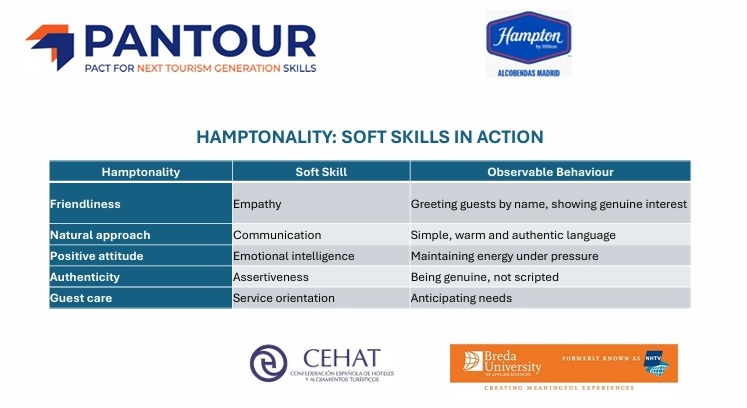
Download the slide deck Carmen Gómez-Álvarez and Alba Escobar Ferreras- SOFT SKILLS HILTON MADRID
Strengthening green skills in Valdichiana Senese
This case from Tuscany brought sustainability down to earth, showing how green skills can be actively developed at destination level. The Destination Management Organization in Valdichiana Senese plays a pivotal role as a connector: aligning local businesses, policy goals, and knowledge initiatives. Through hands-on formats like living labs and targeted training, sustainability becomes something businesses can experiment with and implement, rather than just discuss. A standout insight was the growing appetite among local stakeholders to engage with these topics, signalling that the transition towards greener tourism is not only necessary, but increasingly embraced.
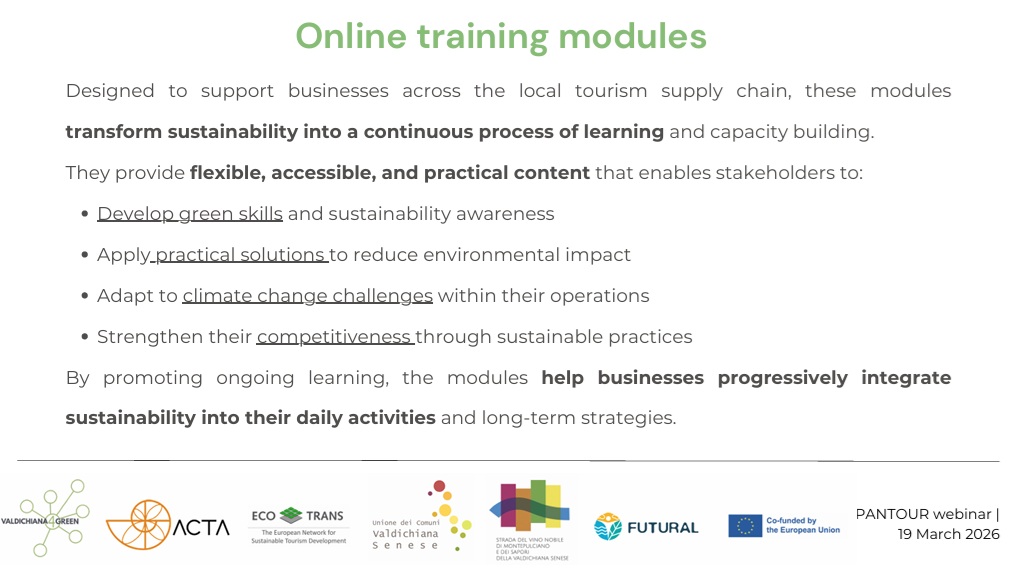
Download the slide deck Giulio Lizio – GREEN SKILLS VALDICHIANA SENESE.
Digital transformation and skills in tourism (University of Pisa)
Taking a broader, research-driven perspective, this session explored how digital transformation is reshaping both jobs and skill profiles across tourism. From artificial intelligence to data analytics, emerging technologies are not only changing how services are delivered, but also what competencies are required in the workforce. The presentation emphasised the importance of European collaboration in this space, particularly in supporting SMEs that often lack the resources to adapt quickly. The concept of the “twin transition”—digital and green—stood out as a defining framework for the sector’s future.
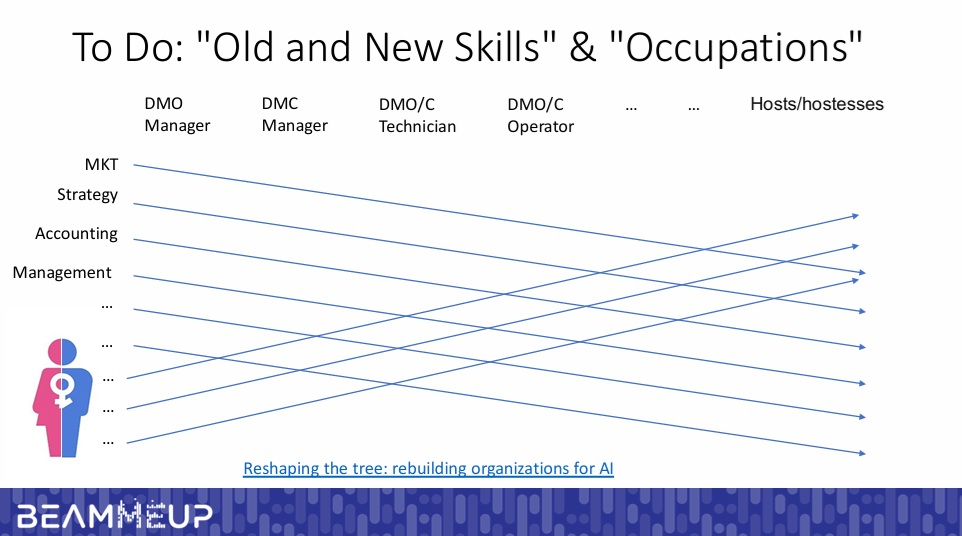
Download the slide deck Gualtiero Fantoni – DIGITAL SKILLS IN TOURISM.
Livestream
If you could not attend the webinar, or you would like to rewatch the sessions, the link is available here.
Looking Ahead
One message became very clear throughout the webinar: the gap between what the sector needs and what the workforce offers is real, and growing. But there is also a clear direction forward. By combining data-driven insights, practical experimentation, and cross-sector collaboration, tourism has the tools to not just react to change, but to shape it. Or, as the opening session made clear: it’s time to move from gut feeling to evidence; and from evidence to action.
A big thank you to our speakers Carmen Gómez-Álvarez, Alba Escobar Ferreras, Gualtiero Fantoni, Yiannis Batsis, Giulio Lizio and Corné Dijkmans, and all participants who joined us during this webinar!
Next up
On 16 April 2026, PANTOUR is organising a full-hour webinar around ”Tourism & Hospitality Training: Bridging Skills Gaps and Industry Needs”. This webinar is not about understanding theory, it is about what you can actually apply tomorrow in your work. Because lifelong learning is no longer just a concept, it is becoming a necessity. The tourism sector does not need more content. It needs better training. Training that sticks, that translates into action, and that prepares people for what’s next.
This webinar is designed for trainers and educators, for professionals working in tourism or hospitality, for those developing skills programmes, and for anyone trying to keep up with the pace of change in the sector. Registration is now open!
No Comments