-1
archive,paged,category,category-best-practice-2,category-551,paged-3,category-paged-3,wp-theme-stockholm,wp-child-theme-stockholm-child,stockholm-core-2.4,tribe-no-js,select-child-theme-ver-1.1.2,select-theme-ver-9.14.3,ajax_fade,page_not_loaded,,qode_menu_,wpb-js-composer js-comp-ver-8.7.2,vc_responsive

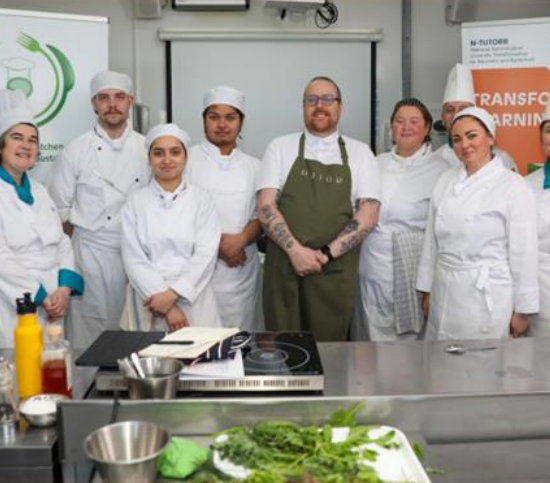
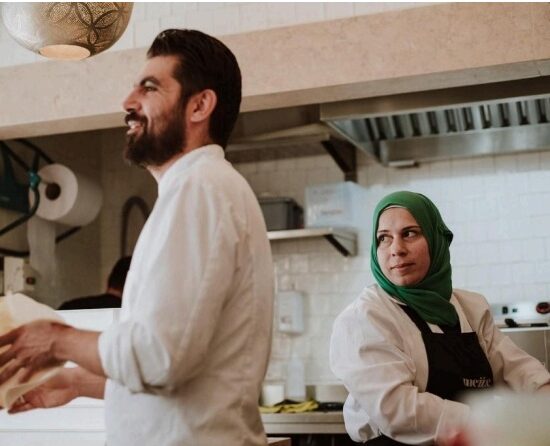
Best practice from Ireland: The Mindful Kitchen

The Mindful Kitchen is an innovative project focusing on the wellbeing of chefs, with training aimed at Culinary Arts 1st and 2nd-year students at the School of Culinary Arts and Food Technology at Technological University Dublin. The project, through applied learning modules, aims to bring awareness to the importance of building a positive and respectful work environment in kitchens, as well as generating a creative space for students and developing skills related to such self-awareness, relationship building, communication skills, creativity, social gastronomy and food sustainability.

READ MORE

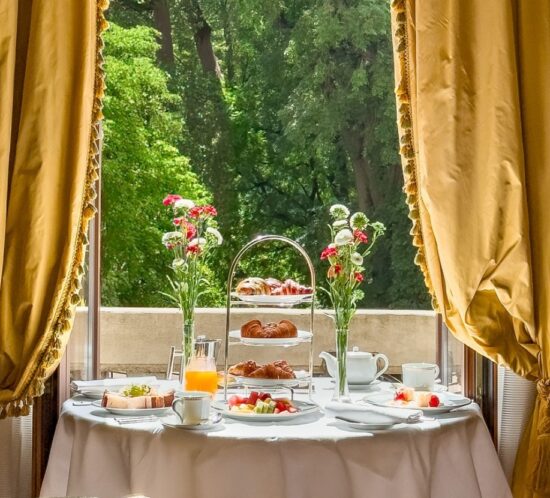
Best practice selection on upskilling and reskilling from Italy: Hotel Principe di Savoia

The Hotel Principe di Savoia, known more simply as Principe, is a historic Milanese hotel. When the hotel first opened as ‘Principe e Savoia’ in 1927, its chosen square was on the outskirts of the ‘heart’ of Milan, but the location near to Stazione Centrale made it perfectly positioned for burgeoning business tycoons of the era. The hotel’s central location is within easy walking distance of the newly built Porta Nuova district, with its breathtaking architecture, and the art-loving Brera district’s bustling galleries and art studios. In 2003 the hotel was acquired by the Dorchester Collection, a London-based company wholly owned by the Brunei Investment Agency.

READ MORE

Best practice on skills development from Greece: The Institute of Greek Tourism Confederation

The Institute of a Greek Tourism Confederation was selected and presented as a best practice because it’s a particularly important initiative towards on the one hand identifying current and future skills needs and on the other hand developing broader reskilling and upskilling actions. The Confederation is a non-profit organisation that has been established as an important social partner, representing the Greek tourism industry both nationally and internationally. The Confederation’s Institute (best practice) has four major partner organisations: Greek Tourism Confederation (SETE), The Hellenic Hoteliers Federation (HHF), The Hellenic Association of Travel & Tourist Agencies (HATTA) and The Confederation of Entrepreneurs of Rented Rooms and Apartments (SETKE). The best practice presents a successful example, on how sectoral partners can develop a large-scale initiative to support lifelong learning through reskilling and upskilling actions. The Institute’s constant focus on skills development defines part of the educational culture of the Greek tourism sector.READ MORE

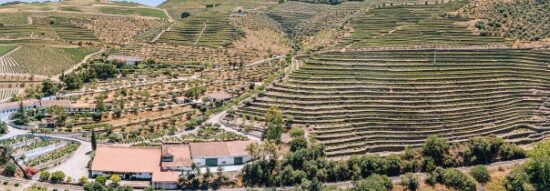
Best practice in skills development: The Fladgate Partnership in Portugal – The World of Wine

The Fladgate Partnership | The World of Wine – “A cultural district with a WOW factor” (Subsector – Food & Beverage). The Fladgate Partnership is a holding company that has businesses in Port Wine, tourism and distribution. In Portugal, it also has distribution companies that supply its products and those of others to hotels, restaurants, retailers and consumers. The World of Wine project is a major initiative in tourism, located in the historic area of Vila Nova de Gaia with a complex of seven museums/experiences, 14 food and beverage outlets (Restaurants, Bars and Cafés), a wine school and shops. In September 2023, Fladgate Still & Sparkling Wines was created, after the purchase of IdealDrinks by The Fladgate Partnership adding further expertise, knowledge and over three centuries of heritage through this new challenge. The Group currently has around 1,150 employees, spread across different facilities in Vila Nova de Gaia, Porto, Lisbon and the Douro. It is the Group’s policy to respect the environment.

READ MORE

Best practice selection on upskilling and reskilling from Spain: HOSBEC

In today’s rapidly evolving tourism industry, developing a strategic approach on skills development within organisations is crucial for a futureproof sector and workforce to remain competitive and responsive to changing market demands. In this series of best practices we highlight key areas of skills development necessary for the digital and sustainable transformation and inclusive tourism growth. We discuss best practices that have been carefully selected in the PANTOUR project countries to get inspired. In this blog, we zoom in to Spain for the best practice HOSBEC.

READ MORE

Best practice selection on upskilling and reskilling from Germany: Müritzhof Knust

In today’s rapidly evolving tourism industry, developing a strategic approach on skills development within organisations is crucial for a futureproof sector and workforce to remain competitive and responsive to changing market demands. In this series of best practices we highlight key areas of skills development necessary for the digital and sustainable transformation and inclusive tourism growth. We discuss best practices that have been carefully selected in the PANTOUR project countries to get inspired. In this blog, we zoom in to Germany for the best practice Müritzhof Knust.

READ MORE

Best practice selection on upskilling and reskilling from Bulgaria: Chef & Gastro

In today’s rapidly evolving tourism industry, developing a strategic approach on skills development within organisations is crucial for a futureproof sector and workforce to remain competitive and responsive to changing market demands. In this series of best practices we highlight key areas of skills development necessary for the digital and sustainable transformation and inclusive tourism growth. We discuss best practices that have been carefully selected in the PANTOUR project countries to get inspired. In this blog, we focus on Chef & Gastro, a great Bulgarian initiative.

READ MORE

Best practice from Portugal on skills development: O Valor de Tempo

O Valor do Tempo, “The world has never been so Portuguese”. O Valor do Tempo Group was created in 1994 in Seia, and its first public expression came in 2002 with the opening of the Bread Museum. The group currently owns 15 different Portuguese brands and is a business focused on customer experience. Remaining faithful to the Group’s values, the brands are based on a legacy of Portuguese history and heritage and honour the past and traditions that time has preserved. The brands don’t want to sell a product; they want the customer to go into the shop and feel absorbed by the atmosphere and take away a memory. They want to leave a memory in the customer’s mind.

READ MORE

Best practice from Spain: The hotels where everyone is included – Ilunion Hoteles

In today’s rapidly evolving tourism industry, developing a strategic approach on skills development within organisations is crucial for a futureproof sector and workforce to remain competitive and responsive to changing market demands. In this series of best practices we highlight key areas of skills development necessary for the digital and sustainable transformation and inclusive tourism growth. We discuss best practices that have been carefully selected in the PANTOUR project countries to get inspired. In this blog, we focus on Ilunion Hoteles, a hotel created in response to the general crisis in Spain in 2008.

READ MORE