

PANTOUR represented training needs in tourism during EU webinar: upskilling and reskilling for the digital and sustainable transition
During the final weeks of 2025, PANTOUR played a key role in an EU-organised webinar on education and training opportunities for the twin transition in tourism. The event, co-hosted by the Skills, Resilience and Inclusion subgroup of the Commission expert group Together for EU Tourism (T4T), took place on 15 December 2025 and aimed to raise awareness of the skills needed for a sustainable and digital transformation of the tourism ecosystem.
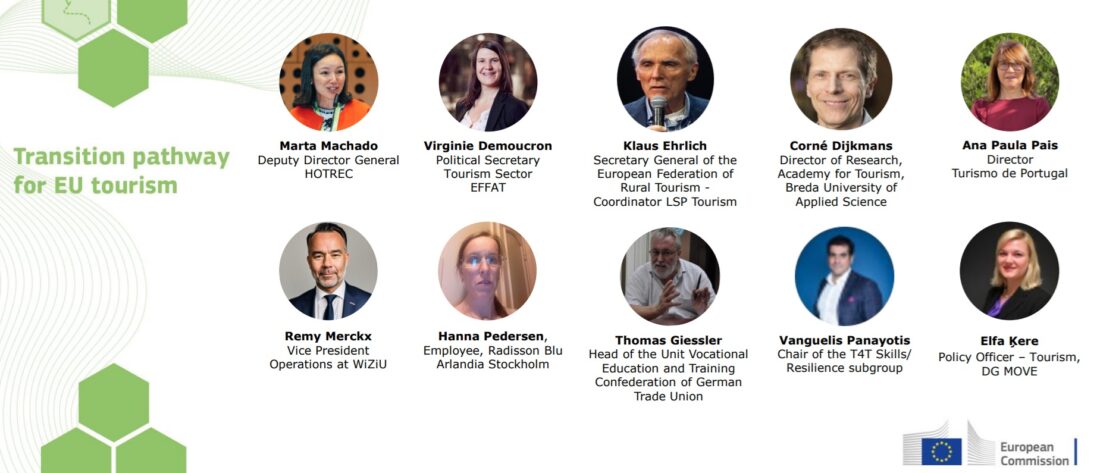
Representatives from HOTREC, EFFAT, WiZiU, Radisson Blu Arlandia Stockholm, the Confederation of German Trade Unions, and our PANTOUR consortium partners—including Ruraltour (European Federation of Rural Tourism), Breda University of Applied Sciences, and Turismo de Portugal—shared key insights from the PANTOUR perspective on “Awareness raising on education and training opportunities needed for the twin transition.”
Klaus Ehrlich, Secretary General of the European Federation of Rural Tourism and Coordinator of the LSP Tourism presented the history and role of Blueprint projects – such as the Next Tourism Generation, Pantour and the upcoming FuTourAlliance – in supporting long-term skills monitoring and strategies in tourism, while explaining how these projects facilitate research, skills intelligence, and the development of toolkits for industry and education. The main aim of these projects is to make tourism a more attractive career option by improving qualifications and job stability, thereby enhancing the sector’s reputation and appeal to young people in a competitive labour market. These projects can support the sector by providing research, skills intelligence, practical toolkits, training templates, best practices repositories and IT tools to help SMEs identify and fill skills gaps. Klaus emphasised the need for real-time intelligence and faster adaptation to skills gaps, leveraging IT solutions to quickly identify and address skills gaps.
Dr Corné Dijkmans, Director of Research, Academy for Tourism, Breda University of Applied Science presented how tourism careers are being transformed by AI, sustainability demands and changing workforce expectations. Drawing on the findings from the PANTOUR project, which investigates the shift from traditional job titles to skills-based portfolios in the tourism, hospitality and leisure sectors, Corné highlighted a significant skills gap; 40% of required skills are changing within five to seven years, especially in areas like generative AI, robotics, augmented/virtual reality and digital skills. He advocated for a shift from job titles to adaptable skills portfolios, emphasing the importance of agility, digital fluency, sustainability thinking and human skills.
Ana Paula Pais, Director of Turismo de Portugal described how Turismo de Portugal organises its qualification responses, focusing on digital and green skills to strengthen skills and talent in the tourism sector. During her presentation she outlined five pillars guiding their action plan: future skills mapping, strengthening education and training systems, promoting continuous upskilling, fostering partnerships and creating attractive working conditions. Ana Paula emphasised the importance of flexible learning methods and company support to overcome constraints in accessing training, aiming to prepare the workforce for tomorrow’s success in tourism. Looking ahead to 2035, Turismo de Portugal’s strategy will focus on digital skills, namely in AI, sustainability with a regenerative focus and greater social responsibility in training.
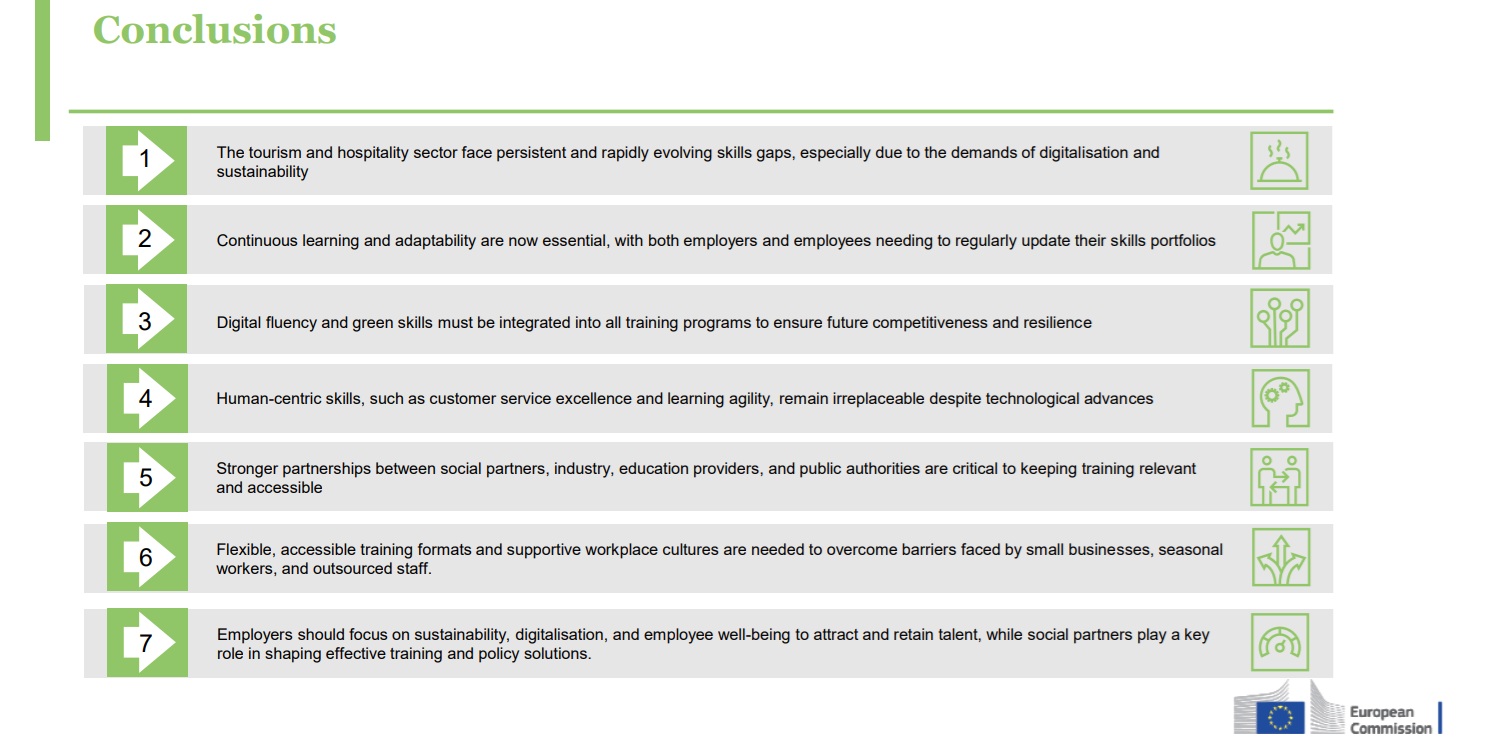
Among other insights that were shared by the speakers, a list of final conclusions and key take aways when it comes to skills is worth sharing:
Watch the full webinar here or go to the webinar page to download the resources and webinar summary.
No Comments