

Piloting of the Sustainable Resources Management programme at Technological University Dublin
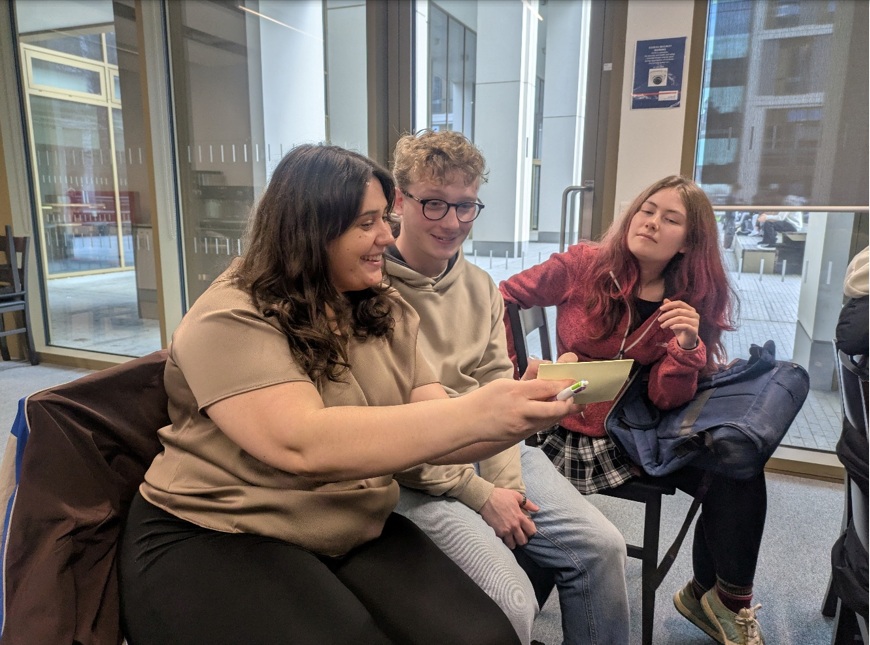
The Sustainable Resources Management programme, created under the PANTOUR research project, was piloted at Technological University Dublin on November 13th. The one-hour session took place at Ballymaguire Restaurant in the Central Quad campus, as part of the induction for 1st year students in the Bakery programme of the School of Culinary Arts and Food Technology. With a total of 28 student participants, the workshop was led by lecturers Sheona Foley and Shannon Dickson with the participation of the researchers Fernanda Rabelo and Fernanda Vergara, and support from the project investigator in Ireland and Head of School of Culinary Arts and Food Technology, Denise O’Leary.
Photo: Shannon Dickson lecturing in the workshop, 13.11.25
Workshop Focus
The session introduced key sustainability concepts, emphasising:
- Waste management
- Circular practices
- Best practices in the bakery sector to reduce waste and promote sustainable skills among students.
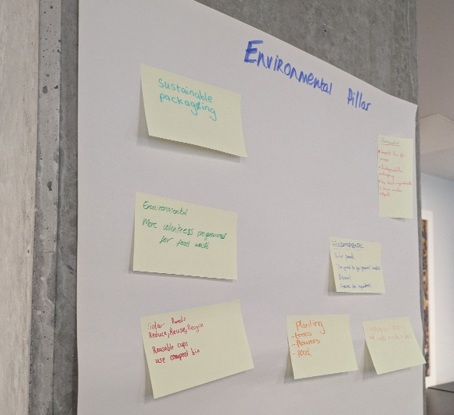
The workshop provided students with insights into effective waste management and sustainable approaches within bakery operations. The session featured case studies highlighting best practices from Irish bakeries, as well as projects currently underway on campus focused on developing metrics to reduce food waste in the School’s practical classes and operations. The session incorporated participatory methodologies to encourage creative thinking and the design of new ideas for enhancing sustainability in the industry grounded in the three pillars of sustainability: economic, social, and environmental.
About the Programme
The Sustainable Resources Management programme is part of a broader toolkit developed by PANTOUR to promote green and environmental skills. The sessions focus on the principles of sustainable resource management and systems thinking. They introduce sustainable practices within hospitality food systems and demonstrate how these can be applied in tourism to support sustainable development and optimise resource use.
Learning Outcomes
The programme aims to achieve the following learning outcomes:
- Understand sustainability and how to balance its three pillars, environmental, social, and economic, within the hospitality context.
- Connect sustainable resource management to the UN Sustainable Development Goals (SDGs), particularly SDG 2, Zero Hunger, and SDG 12, Responsible Consumption and Production.
- Define what is a food system and its relation to hospitality businesses.
- Identify sustainable hospitality practices and critically assess unsustainable ones.
- Reflect on personal values, attitudes, and behaviours regarding food sustainability.
Programme Development
The programme was designed by Shannon Dickson, Sheona Foley, and Roseanna Ryan, lecturers at the School of Culinary Arts and Food Technology, for the PANTOUR project. The programme will be published on the PANTOUR website following its pilot phase and will be accessible to educators seeking to enhance skills development in the food, beverage, and hospitality sectors. PANTOUR is a European-funded research initiative that develops innovative and cooperative solutions to address skills needs in the tourism ecosystem. Piloting took place this year in the 10 European countries participating in the consortium, in VET and higher education organisations.
Tourism Sector Skills Toolkit
The PANTOUR Toolkit provides resources and guidance for:
- Educational institutions
- Training providers
- Employers
- Government departments
- Individuals
Its purpose is to help stakeholders review green, social, and digital requirements in hospitality and tourism and support the development or updating of training resources.
Click here to go the webpage of the Tourism Sector and Skills Toolkit.
Developed by Fernanda Rabelo and Nwabuogo Enwerem from Technological University Dublin.
(*The students and lecturer depicted in the photos have granted permission for their use in educational materials and project outputs)
Estika
February 13, 2026 at 5:14 PMReally interesting to see this programme being piloted in such a hands-on setting 👍 Connecting sustainability concepts with concrete bakery operations (waste management, circular practices, real case studies) makes the learning outcomes feel immediately relevant for students. Great to see systems thinking and the SDG links built in as well – a strong foundation for future hospitality professionals 😊