


Building a Future-Ready Tourism Workforce: major insights from 4 years PANTOUR
What do you remember from your last holiday? It might be the experiences, the people that made it memorable, or the freedom of having time to enjoy life. Have you stopped to think how all of this is made possible? The answer might not be obvious, but it’s those who work behind the scenes: the staff who bring these moments to life.
Employees are constantly training to improve their skills and deliver better service. Recognising this, PANTOUR has spent the past four years developing resources to help workers across Europe stay up to date and adapt to new trends and challenges such as digitalisation, sustainability, climate change, as well as equality, diversity, and inclusion (EDI). Some valuable examples include two versions of EDI Handbooks and Skills Strategy and Action Plan for 2026-2036. These outputs offer practical and forward-looking approaches to building a workforce that is not only skilled, but also inclusive and resilient.
Why inclusion needs to be part of the conversation
In recent years, EDI has been recognised as a crucial part of organisational culture because it underpins fair access to opportunities, supports more inclusive and representative workplaces, and enhances the resilience of the tourism and hospitality sector. Additionally, when people from different backgrounds and cultures are brought together, innovation is fostered and talent retention and well-being are enhanced. This is because when people feel valued and included, they are more engaged, motivated, and likely to stay. So how can the sectors embed it in organisations?
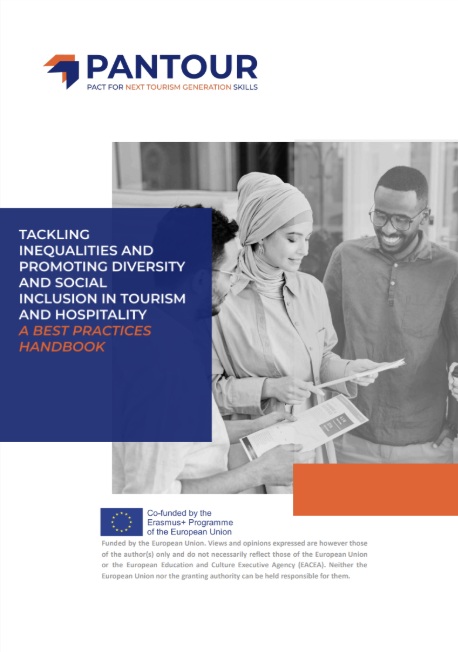
To help stakeholders understand its importance and how to integrate it, PANTOUR developed two versions of its EDI Handbook. The long version, Tackling Inequalities and Promoting Diversity and Social Inclusion in Tourism and Hospitality: A Best Practice Handbook is a comprehensive document that provides research on current EDI policies and practices to paint a landscape of training in Europe. This was done through interviews, with educators to identify skills training needs as well as conducting a survey across several countries including: Ireland, Spain, Greece, the Netherlands, Italy, Finland, Portugal and Bulgaria. A guide on how to implement EDI practices, including change management models and plans, practical tools as well as developing an EDI strategy plan was also discussed. Going beyond theory, the full version also included real examples of how organisations across Europe are putting EDI into practice by introducing 31 best practice case studies. On the PANTOUR website, examples on these case studies can be found linked to a range of inclusive practices, such as accessibility training, fair hiring practices, developing a culture of wellbeing, among others.
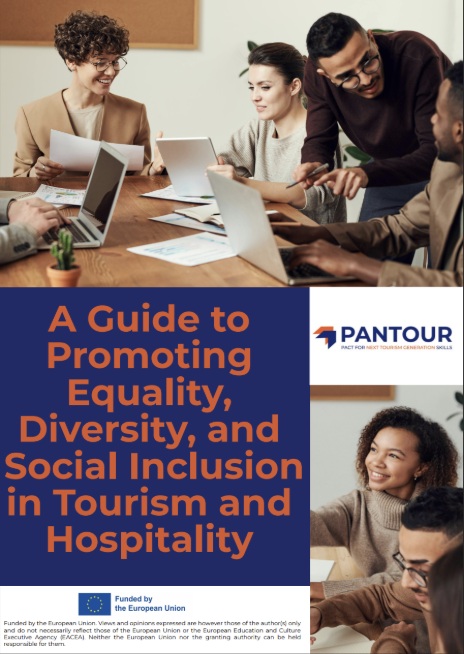
A Guide to Promoting EDI in Tourism and Hospitality is the short version of the handbook aimed for SMEs. This Handbook also describes the importance of EDI in tourism and hospitality training and stresses the importance of embedding inclusive practices in different organisations. Research, tools, resources and 10 Best Practices are summarised in this version with the objective of helping employers in the industry use it as a road map for actively integrating, measuring and improving EDI within their organisations.
Looking ahead: the skills the industry needs
The latest research that PANTOUR developed is the Skills Strategy and Action Plan for 2026-2036. This Action Plan looks at the bigger picture, proposing future directions essential for advancing sustainable skilling, upskilling, and reskilling development in tourism and hospitality. In other words, it provides recommendations for stakeholders in tourism, including education and training professionals, tourism public bodies, policymakers and employers to ensure the tourism workforce is equipped with the skills needed. To suggest new actionable strategies, this Action Plan was created from a combination of:
- Built from the NTG Blueprint for Sectoral Cooperation on Skills as a basis, which aimed to further cooperation for developing sustainability in the education and training ecosystem in tourism and hospitality
- Updating it by integrating skills needs identified over the four-year project, ensuring that proposed sustainable training remains relevant and future-oriented
- Researching and incorporating the EU latest polices to keep actions grounded in relevant and evidence-based practices
- Consulting stakeholders from the various subsectors through survey and interviews, identifying gaps in policies on skills and future needs to obtain evidence-based data
The Skills Strategy and Action Plan for 2026–2036 introduces strategies produced by the consortium to advance skills development and strengthen education and training. To do that, the plan developed 45 actions with challenges identified, examples on how to develop these actions, and potential benefits for organisations that embrace sustainability and promote skilling for the future workforce in the sector. These are illustrated with practical examples from best practices case studies and tools embedded throughout the document, ensuring practical implementation of this strategy.
A clear set of priorities
What’s useful about this strategy is that it addresses the main challenges the sector is dealing with by encouraging employers to create environments where lifelong learning is valued.
The strategy prioritises addressing workforce gaps and staff shortages while enhancing the overall attractiveness of the sector. It also supports the digital transformation of tourism through the adoption of new technologies and seeks to drive green innovation and environmental responsibility through sustainable practices. In parallel, the strategy aims to build resilience, enhance wellbeing, and strengthen social competencies across the workforce. A further priority is to promote lifelong learning and expand access to tourism education to support a more sustainable industry. Finally, the strategy emphasises the importance of strengthening collaboration and sharing best practices, while promoting inclusion, social fairness, and combating discrimination across the sector.
Final thoughts
These PANTOUR outputs represent the culmination of years of research in a practical and implementable way. They also show that building a stronger tourism sector is about creating the conditions where people can grow, contribute, and adapt over time. Prioritising skilling is key for the future of the industry. Additionally, it is key to foment more inclusive workplaces to attract and retain talent, provide skills training accessible to different groups, and ensure collaboration across industry, education, and policymakers.
This blog was developed by Fernanda Vergara, a Researcher for the PANTOUR project at Technological University Dublin. The TU Dublin team was responsible for the development of the Skills Strategy and Action Plan of the PANTOUR project. GenAI was used in this text to correct grammatical errors, provide clarity and improve readability.
Nathalie
June 9, 2026 at 6:02 PMExcellent article! The insights from four years of PANTOUR research highlight the importance of developing digital, green, and social skills for the future of tourism. It’s encouraging to see such a strong focus on workforce development, innovation, and long-term sustainability in the tourism sector. Thanks for sharing these valuable findings!