

Finland’s national event: the changing landscape of tourism | Exploring future skills, work and opportunities
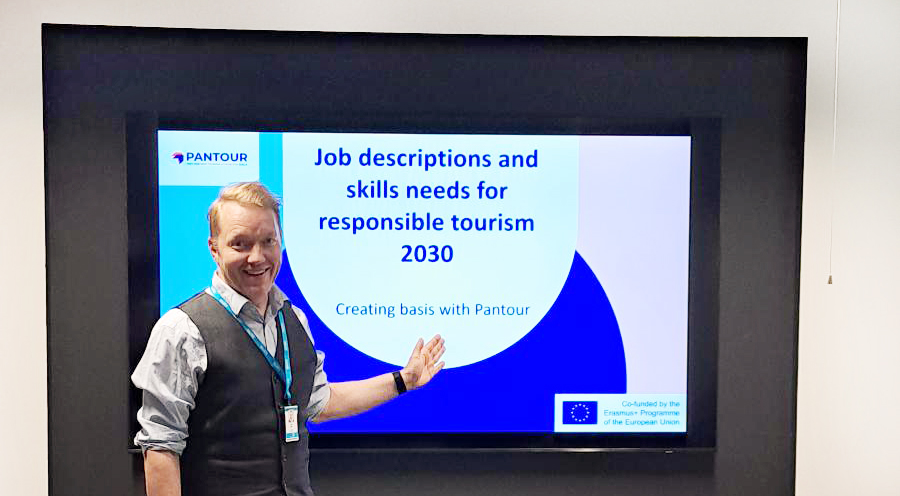
On 20 January 2026, tourism professionals, educators, students and industry stakeholders gathered both online and at the SAMK Pori Campus for the seminar The Changing Landscape of Tourism: Operating Environment, Job Roles and Skills. Organised as part of the EU-funded PANTOUR project, the event brought together 109 participants to discuss how the tourism and hospitality sector is evolving and what kinds of skills, attitudes and competencies will be needed in the coming years.
The seminar focused on one central question: what will tourism work look like in the next 5–10 years? Through expert presentations and open discussion, the event highlighted how rapidly changing operating environments, new technologies, sustainability demands and shifting customer expectations are reshaping the industry.
A programme focused on the future
The afternoon began with a welcome presentation by Dr. Altti Näsi, who introduced the broader objectives of the PANTOUR project and reflected on the future of tourism work. The programme then continued with industry viewpoints from leading organisations representing different parts of the tourism and hospitality sector.
Katri Jakosuo from the Finnish Hospitality Association MaRa presented current hospitality industry trends and the changing competence needs identified through national employer surveys. Her presentation highlighted several key megatrends affecting tourism and hospitality businesses, including population ageing, wellbeing challenges, digitalisation, urbanisation, climate change and geopolitical uncertainty. These trends are already influencing recruitment, employee wellbeing, customer expectations and the need for continuous learning across the sector.
Emilia Sarkia from Scandic Hotels shared perspectives from one of the largest hotel operators in the Nordic region. Her presentation highlighted the importance of workplace culture, employee wellbeing and adaptability in an industry where customer expectations and work environments are constantly evolving. The discussion also touched upon sustainability, digital customer experiences and the growing importance of meaningful service encounters.
Antti Saarikoski from PowerPark (Finnish amusement park) provided an inspiring perspective from the experience and attraction industry. His presentation emphasised the importance of creating memorable customer experiences, strong teamwork and organisational culture. He also discussed how tourism destinations need to continuously innovate while maintaining a customer-oriented mindset. It’s a balance between keeping old customers, but also always getting new ones.
The seminar also included a presentation of the tools and outcomes developed within the PANTOUR project by Altti Näsi and Olena de A. Gonzalez. The project has focused on identifying future tourism skills needs and supporting both organisations and educational institutions in preparing for change as well as creating training materials for the industry.
Attitude, teamwork and human skills matter more than ever
One of the clearest messages emerging from the seminar discussions was that attitude matters enormously when entering the tourism and hospitality industry.
While technological skills and industry-specific competencies remain important, participants repeatedly highlighted that employers are increasingly looking for employees with strong work ethics, teamwork capabilities and social skills. The ability to communicate, collaborate and adapt to different situations. Technology makes the reservations, but on location, it’s about human contact.
Several speakers also noted that tourism remains a deeply human-centred industry. Even as digitalisation and artificial intelligence continue to transform operations and customer service processes, meaningful human interaction remains at the heart of successful tourism experiences. Ratings on services are strongly linked to customer satisfaction.
The discussions also reflected concerns regarding workforce availability, employee well-being, and the attractiveness of the sector among younger generations. Creating supportive work environments and opportunities for personal growth were identified as essential factors for the future competitiveness of tourism businesses.
Contemporary trends reshaping tourism
Throughout the event, several contemporary trends emerged as particularly significant for the future of tourism and hospitality.
Digitalisation and emerging technologies continue to reshape customer journeys, marketing and service production. Businesses are expected to adopt new digital tools while simultaneously maintaining authentic and human-centred customer experiences.
Sustainability and climate change were also strongly present in the discussions. Consumers are increasingly aware of ecological impacts and expect tourism businesses to operate responsibly. Overtourism and its effects on local communities were mentioned several times. At the same time, changing weather conditions and global uncertainty are creating new challenges and opportunities for tourism destinations.
Another major theme was the changing nature of work itself. Multi-skilled employees, flexibility and continuous learning are becoming increasingly important in an environment where customer behaviour, booking patterns and service expectations are rapidly evolving. This is especially true for small companies with limited resources and few staff members. Each staff member must master many skills.
Building the future together
The seminar demonstrated that the future of tourism cannot be built by individual organisations alone. Collaboration between educational institutions, businesses and industry organisations will be essential in ensuring that future professionals have the competencies needed in a changing operating environment.
The discussions throughout the day showed optimism despite the challenges. Tourism continues to offer opportunities for meaningful work, creativity and international collaboration. By bringing together voices from education, hospitality, tourism development and industry practice, the seminar created an important platform for dialogue about the future of tourism work and skills.
More importantly, the event highlighted that while technologies, trends and business models may evolve rapidly, the core of tourism remains the same: people, experiences and human connection.
No Comments