

Learning from a best practice: a National and Regional Skills Pact (NRSP) for tourism and hospitality in Spain
In Spain, the NRSP (National and Regional Skills Partnership), originated from the Next Tourism Generation (NTG) project, in response to the demonstration of how industry and academia working together would bring the solution to the serious problem of skills needs and training offer. During the nearly five years of NTG project we analysed how we could bring both worlds together. The consortium was created with the aim of closing this gap: industry and academia doing the research and the implementation.
When PANTOUR, the follow up project, was approved, the consortium had a clear goal: both industry and academia should represent fifty per cent each, they had to be represented equally. There was one more thing clear: the ILSG (Industry Led Skills Group) should evolve into the NRSP. This evolution would facilitate that industry, academia and government in each country, because they could analyse how to implement the project results. We spoke with CEHAT, representing the Spanish NRSP.
Why did members decide to adhere?
On one hand, it is commonly accepted that industry detects its skills needs. Entrepreneurs, managers, chiefs and all operation positions are able to describe the different job positions and to relate the skills needed for their development. On the other hand, academia is expert in creating learning contents and providing them to students, both in formal education and in lifelong learning.
As major industry representatives in Spain, ITH (Instituto Tecnológico Hotelero) and CEHAT (Confederación Española de Hoteles y Alojamientos Turísticos) achieved to involve a good number of industry and training institutions representatives. They have strong motivation: improving knowledge about skills needs would facilitate better training. This would result in professionals who are more motivated, integrated into their job positions and more efficient.
What activities engaged them?
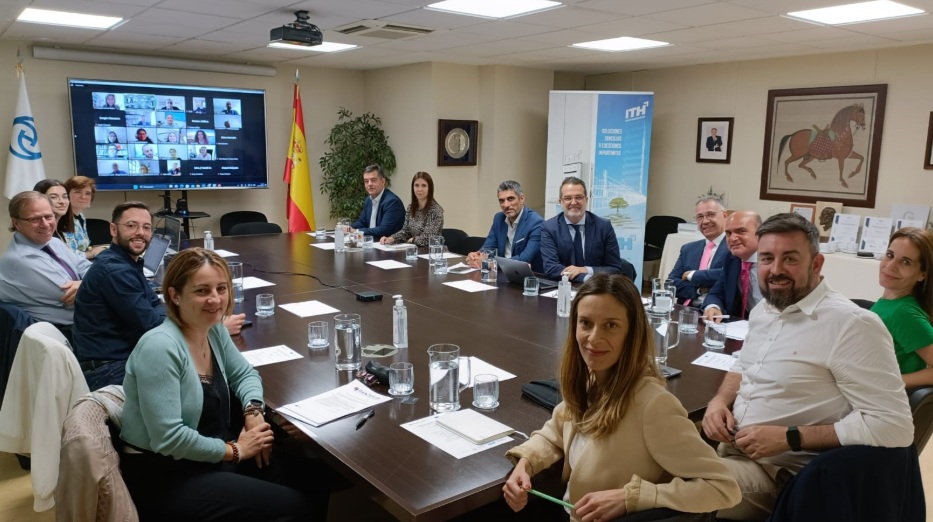
The first action put in place was giving relevance to the partnership, so members could have a reason to be there. This would also give visibility to the results that should be shared with all stakeholders through social networks and media press. This was done by giving a name to the group. It was named Foro Español por las Competencias Turísticas (FECT).
All the activities performed in PANTOUR have been validated by the FECT. We have analysed in depth all three sets of skills (green, social and digital), we have piloted the training courses, we have contributed to the EDI (Equality, Diversity and Inclusion) research, to the survey and the interviews for the Country Skills Profile reports and to the New Occupational Profiles handbook, and we have tested the Skills Lab.
All these activities have managed to involve all members, and to give them a mission. This mission was perceived as their way to improve the industry, and it has engaged them even more.
The Role of the NRSP
The NRSPs are the national consultant bodies that should provide information about industry trends and professional needs. Within the NRSP, stakeholders will discuss about new business models and new customer and employee experience. These discussions will raise new skills and competencies needs that will be addressed by academia. All doubts and different points of view will describe a new scenario on which professionals will have to develop their roles, and that will be achieved through experience and training.
The NRSP will also anticipate legal changes, adapt leadership to new generations and will lead policies on talent attraction.
What makes it successful?
The succes of the NRSP depends on the mission that it has. Facilitating activities that must be validated at national level, doing national research or giving visibility to any national result, help members to feel useful. Distributing and encouraging training gives as well a reason to be there.
Any activity that can give external visibility to the members will also consolidate their participation and engagement. In Spain, for example, we organised a workshop on social skills. We enjoyed the participation of a very well known coach, that was followed by a round table on hospitality skills. The venue took place at ILUNION headquarters, a company which mission is to “create a better world with everyone included” employing 30.000 people, 50% with any kind of disability.
We would like to reinforce the idea that the members of the NRSP are the ones who do national research and who propose improvements that will boost our sector to a new level of personal performance and engagement.
Future steps
Looking ahead, the engagement of the government in the NRSP will assure continuity and make sure that the new trainings will be adopted as regular curricula on different VET and HE schools.
Once the project will be over, how are you planning to keep the NRSP up?
Hospitality is an alive sector. It is always evolving and it has always something new on the scope. Innovation is present not only in technology but also in day to day operations. Skills will change and so will do training needs. NRSP will be the body that will take care of closing this gap.
NRSP can be defined as the national body in charge of proposing new training pathways in the hospitality industry. From this point of view, giving the floor to discussions will facilitate better professionals and innovation in the industry.
No Comments